MH: Gene, tell us about your early musical influences, and your personal playing background. MH: Gene, tell us about your early musical influences, and your personal playing background.
GB: Born July 6th, '66 in the suburbs of Detroit, MI (Southgate). My parents were my first real influence. As early as I can remember we always had various types of instruments around the house that always seemed to hold my interest. I grew up with one younger and two older sisters. My older sisters were always keeping up with the current music and I would sneak into their room and spin as many records as I could. The Beach Boys, Guess Who, The Beatles, Alice Cooper, The Who, Rolling Stones, and then I pulled out two records that rocked my world, Led Zeppelin 4 (Black Dog) and the first Black Sabbath album.
I received my first acoustic guitar on my 7th birthday although I still had no direction in what to do with this thing, so I would serenade my girlfriend at the end of the block. Christmas, age 11, I received my first electric guitar, a Global single pickup with a Sears amplifier. My neighbor's mom gave guitar lessons at our local hockey rink and cost $10 for 10 lessons. There was a group of 10 to 20 of us learning 'Michael row your boat ashore', 'Jimmy crack corn' and more of those types of folk tunes.
Meanwhile a close friend of mine was learning all these KISS tunes from this guy we called "FUZZ". He was this white dude with the biggest Afro I had ever seen and played a White Gibson Flying V. Kiss became my next major influence and I had every square inch of my bedroom walls covered with them. From there, Aerosmith, Ozzy Osbourne, Hendrix, UFO, Scorpions, Uriah Heep, Frank Marino, AC/DC, Nazareth, Judas Priest, Iron Maiden, Rush, spawned my early teens. Ted Nugent's "Cat Scratch Fever" was the first song I ever figured out on my own and from there my ear was born.
We moved to Santa Maria, CA as I was just entering 11th grade ('82). Within 6 months I was back into a band and moving forward from where I had left off in Michigan. I met up with Jerry Coehlo, www.coelhomusic.com, who was the cat everyone went to for lessons. Jerry had graduated from GIT's very first class and was way up on jazz, theory and everything I was searching for and could never find. He opened my eyes to a whole New World of playing and fed me the tools I needed to really learn my fretboard and understand what I was doing. As soon as I graduated from high school ('84) I headed straight for Hollywood and GIT. This was one of the most memorable times of my life and really pulled me out of my shell. There were so many good players from students to teachers and everyone was constantly feeding off of each other.
After GIT I went on to write and publish my own instructional book and video, "Mean Gene's Insane Lead Guitar Manual". It consisted of 100 pages of what was the core basis of my playing to date. It's not a 'play this lick' type of book, it focuses on the fundamentals and understanding your fretboard. Covering the main variety of blues, pentatonic, chromatic, diatonic and harmonic minorscales, moving into and interpreting key signatures, how notes are stacked to create chords, plenty of drills, exercises, written and playing tests to make  sure you're getting what you paid for. Plus a 2-hour video that takes you right through the book. It was filmed in my shred heyday and has the typical 80's grind tone but all in all any style player could learn quiet a bit from it, complete with on screen graphics and tablature. Bands I played in always performed around the local club scene and did the occasional Hollywood Strip gigs. I still play to this day with our current band called "The Wallshakers", the name says it all. sure you're getting what you paid for. Plus a 2-hour video that takes you right through the book. It was filmed in my shred heyday and has the typical 80's grind tone but all in all any style player could learn quiet a bit from it, complete with on screen graphics and tablature. Bands I played in always performed around the local club scene and did the occasional Hollywood Strip gigs. I still play to this day with our current band called "The Wallshakers", the name says it all. MH: Can you recall the first decent guitar you ever owned?
GB: In the 70's offshore guitars were not to the level they are today so most cheap guitars were very cheap and played like crap. I was taking these junkers, tearing them apart and building my own guitars with these parts. I was a huge fan of Flying V's and BC Rich Bich's, Joe Perry and that 10 string Bich rocked my world. So I was playing all these Frankenstein guitars until I was finally able to buy a black '78 Gibson Les Paul deluxe from a good friend of mine in '82. MH: Can you recall the first guitar you modified or built?
GB: First guitar I built was in 7th grade and it was a take off of a Gibson SG. As kids we usually didn't have access to high dollar guitars to trace or knock off so we usually had to trace patterns from any copy we could find. The action was a mile high, I had placed the bridge just anywhere so it wouldn't tune to save your life. We had no jigs or templates so everything was hand routed, band sawed and sanded. It was soon sacrificed as part of my Halloween Kiss costume (Ace Frehley of course) and I taped all these firecrackers and bottle rockets to it and had a blast.
 MH: Who or what influenced you early on to pursue guitar luthiering as a career? MH: Who or what influenced you early on to pursue guitar luthiering as a career?
GB: Most definitely my woodshop teachers in junior high and high school and my parents. That coupled with the infinite search for the ultimate tone in guitars, amps, accessories, one's own playing skills and the unfolding world of woodworking and its machinery. There wasn't much at all in the way of how to books back then so I had to learn by trial and error and hanging aroundother music shops.
MH: What types of guitars did you appreciate as you decided to pursue this as a career?
GB: It varied as times, fads and icons changed. Seeing who many of my guitar heroes were Les Paul's, Flying V's, Explorers, SG's, hot rodded Strats, and some of the early BC Rich neck thru models pretty much shaped by early building stages. Once Jackson guitars hit and the whole mid 80's rock thing I started my first business under the early 'Mean Gene' brand name at age 19. My first 'Mean Genes' were being built in Huntsville, AL, while I worked for Robbins Music. There I gave a lot of private lessons, did sales in the guitar amps and effects department, performed all repairs and I built about 10 guitars while there. They were all different, from Tele's to neck thru Strat's, Explorers and other customer defined body shapes. Jack Robbins owner of Robbins Music was the first guy to give me a shot at being a repairman.
MH: Obviously your experience with both the Gibson and Fender Custom Shops was instrumental in branching out on your own. Tell us about your experience with both companies.
GB: I knew that to do anything musically I would need to get out of Santa Maria and get into the big cities. I went south on job hunts planning my escape from Santa Maria searching primarily for a building/repair position. I met up with Roger Giffin who had recently taken over as the sole employee and Master Builder for the Gibson West Custom Shop. Roger needed an apprentice and was waiting Gibson's approval to hire someone. Six months later I get called down to audition against six other hopefuls. Roger had each guy work a day separately and do a refret on some of the Gibson 2nds they would send him. This gave him a good "one on one day" to see how well we worked and if Roger could get along with this person for a long time. Six months later I get a call and Roger asking if I am still interested, I was packed and moved within a week. Roger became my main mentor for life and really inspired me with the detailed artistic work he did. We had bare necessity machinery and had to make all of our own templates, fixtures and specialty gizmos to pull off the wide variety of work we did. Our shop was located next to Gibson West Artist Relations in North Hollywood, CA. We naturally worked on many artist guitars and were also the local Gibson warranty shop and repaired any brand under the sun. We built about 12 to 20 guitars per year. Some guitars built from kits we would get from Gibson, others we built from scratch andwere usually things Gibson Nashville was not interested in building or had discontinued. We would build the raw guitar, ship them to Nashville where Tom Murphy would perform his magic and send them back to us for assembly. Relations in North Hollywood, CA. We naturally worked on many artist guitars and were also the local Gibson warranty shop and repaired any brand under the sun. We built about 12 to 20 guitars per year. Some guitars built from kits we would get from Gibson, others we built from scratch andwere usually things Gibson Nashville was not interested in building or had discontinued. We would build the raw guitar, ship them to Nashville where Tom Murphy would perform his magic and send them back to us for assembly.
Roger's clientele was primarily made up of pro players, touring acts, to local session players. This array of clients brought in only the best of vintage and high end gear from early Gibson 1900 to all Gibson acoustics, Mandola basses, Gibson Harp guitars, F5 mandolins and branched into Brazilian Rosewood Martins, vintage Fenders, Rickenbackers, Gretsch, Dobros, and all the modern stuff going on. At one time we had one Korina V and about 6 - '54 to '60 LP's all in for repairs to restorations belonging to Keith Richards, Jimmy Page, and various collectors or players.
1992 Gibson moved the shop into the old Burbank, CA. Tobias Bass factory where we had 7,000 sq. ft and still only 2 guys. The good thing was we had space beyond belief, spray booth, buffing wheels, offices, assembly room, wood shop, and case storage. The bad thing was we were doomed from lack of interest from Gibson Nashville. The building overhead killed us but then again we weren't allowed to hire any additional employees. The writing was on the wall although we had positions available at Gibson Nashville, but neither Roger or I was interested in relocating. I look back at my time spent with Gibson as a time of great detail learning, primarily in vintage gear.
Taking in heavy consideration where I just left I found growth and further education at the Fender Custom Shop while the GWCS was closed down roughly six months later. Where else better to go than a major icon in guitar history? John Page was the head of the Custom Shop at this time and is a man with great vision and pride with excellent people skills and he knows how to motivate and encourage others to grow. I was slowly being groomed to begin the first American 'Robben Ford Signature Series'. I worked with Robben and his tech Jeff Rivera for many years getting to know and understand what Robben likes, hears, feels and sees in his tone and guitars. I was only involved with the actual model construction for about one-year as I trained Greg Fessler to take over the position although I still catered to Robben often. Fender is best known for building Strats and Tele's. Their back orders were huge for one-off Master built guitars and they needed good builders. Jay Black "Senior Master Builder" became my second mentor in my building career. He was a very instrumental person in finding people within the shop that had building chops as well as the focus that kept each builder's guitars still perceived as Fenders. We were constantly dealing directly with the store dealers, end users, or endorsed artists and it was very important to remember that everything we did had to be worthy of the Fender name and therefore required a very professional etiquette.
I seemed to live in the wacky world of orders where most everything had to be made by hand. As I graduated from Master Builder to Senior Master Builder I became more involved with the daily troubleshooting and training teams on short complex runs. I built a good amount of double necks and all very different from 6/12's, Bajo tenors, a Custom Tele neck thru that was a Thinline on the 12 and a solid body Floyd on the 6, Jaguars, Jazz Masters, and a hand full of 50's and 60's Jazz and P Basses. I also was very involved in the release of the C/S late 60's Big Peghead Strats, Rosewood Tele's, the Contemporary Carve Top Strats, the John Jorgenson Signature C/S Tele. There were so many good builders that we were constantly pushing each other for new ideas and it was a very exciting and inspirational time. MH:  What and when was the very first guitar built that showcased the Baker name on the headstock? What and when was the very first guitar built that showcased the Baker name on the headstock?
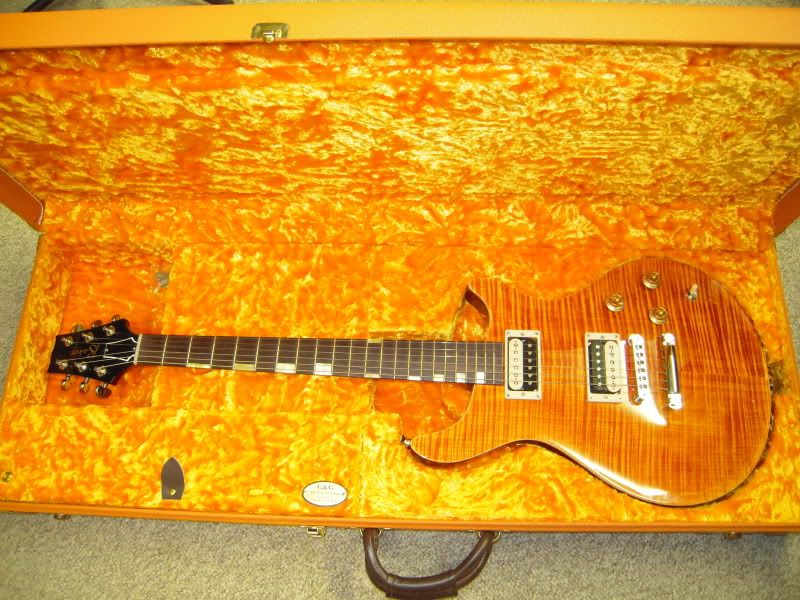
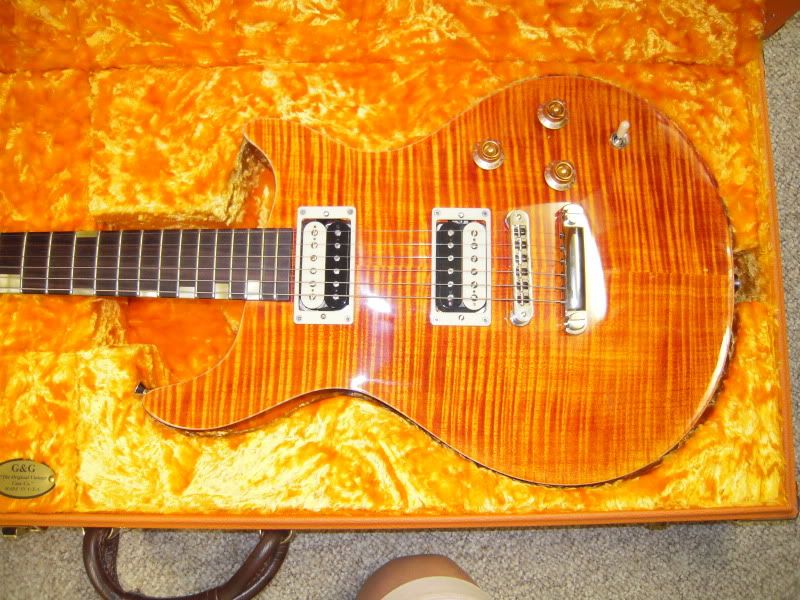
GB: I believe it was Dec '93, Serial #001, B1 25.5 scale, Tobacco Burst, Brazilian board, phat Quilt Top with 2 hums built in my partner/s garage (Gil Vasquez). I began with the 25.5 scale because no one was making a 25.5 scale LP style guitar. Ronnie Montrose swears by these monsters for their added tonal range, increased natural volume, lively harmonics overtones and a neck pickup tone to die for. I have always thought most 24.625 scale model neck pickups were often muddy by nature, 25.5 scale models add a voice that's beautiful, clear and full. MH: Tell us about the early days of starting Baker Guitars and when did you officially open as a company?
GB: I began taking night school while living in Riverside learning Computer Aided Drafting because I knew that by documenting all our designs we could quickly print blue prints to aid in build fixtures, guitars, electronic schematics and see problems before they happen. This would eventually play an important role in CNC machining, anything I can draw, 2 or 3 dimensionally, I can get our Haas VF-4 Vertical Mill to chop up anything from wood, plastic, shell materials to steel. We officially opened as a business in January '97. We began in Gil's one car garage, then a year later upgraded to a two-car garage. From there we detailed out the garage attic, built a 10x12 shed on the side of the house to handle the overflow and went as far as occupying two local storage lockers before we finally uprooted and headed back to Santa Maria. Prior to moving I had brought Gil and his family up to see the Santa Maria area and if it was somewhere they would like to live. Now that they're here we can't get rid of them.
The move to Santa Maria (April '99) and getting our first shop setup (May 5th '99) was near hell. We sold our house in Riverside, cashed in the majority of my Fender 401K and let it all ride on the shop. We held the official grand opening of the shop on July 6 '99 (my birthday). The first year, there were just the three of us in a 1475 sq. ft building, throughout 2000 we hired an additional 3 people to handle the level of production to support our overhead. Then tragedy strikes and our first CNC machine we purchased became a big lemon. It was breaking down every other month and would be down for 5 weeks at a time and we had to go back to hand building. It was under warranty but a warranty is only as good as the company behind it. After 6 or 7 major breakdowns we returned the machine to the manufacturer and found our current Haas VF-4 machine which has been a jewel ever since.
Expansion set in January 2001, as we needed to bring the paint department closer to us. With the high level of perfection we surround and pride ourselves on, we needed to create an environment well suited for paint. We took on an additional 1475 sq. ft. building adjoining our current woodshop and installed 2 - 10' x 12' spray booths to allow us color in booth one and clear coats in the second.... to be continued. MH: Currently tell us about your facility and how many employees are on the Baker staff?
GB: There are 12 full-time people including myself and we have the shop broken into 6 basic departments, necks, bodies, paint, buff, assembly and the office. We have roughly 2 people per department to help keep each area running smooth while cross training and promoting employees from within. Bryan Eskew is the foreman of the woodshop and oversees all construction, Gil Vasquez heads up as VP of Operations, purchasing, warranties, and oversees the entire shop as well as the lead assembler. Shaun Nix heads up the paint department, Jennifer Beck handles all office management, Forrest Williams takes care of the web site, marketing, graphics, artist relations and sales. Where I basically oversee everything and help organize, trouble shoot any department problems, drafting, CNC programming, training, research and development, model prototyping, sales, artist relations, clinics and customer feedback question/answer support.
MH: How many models are you currently producing and briefly describe?
GB: • BJ Series - Flat top models which vary from the solid to hollow body construction.
• BJ (J-Junior) Solid Mahogany Neck and Body
• BJ Unbound - Solid Body that features a 4A Maple Top and natural wood binding.
• BJC (C-Chambered) heavily hollowed body with a center tone T bar. (feather weight)
• BJH (H-Hollow) features the added sound hole to the open its voice for a honky, bluesier, jazz vibe. (Feather weight)
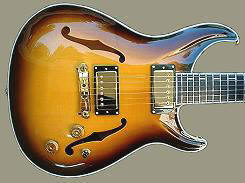
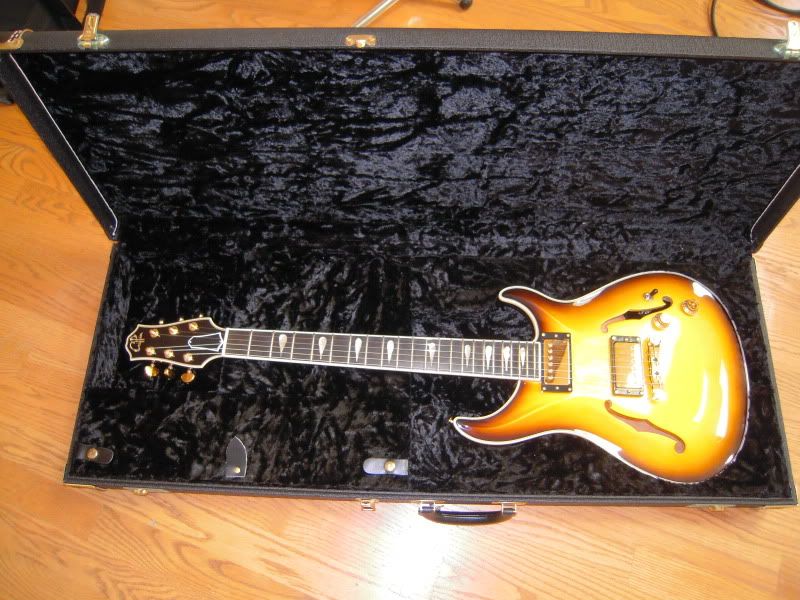
• B1 Series (1-carve top) Carve top models, which vary from the solid to hollow body construction.
• B1 Unbound -Solid Body which features a 4A Carved Maple Top and natural wood binding.
• B1-Solid Mahogany Neck and Body, 4A Carved Maple Top, neck and body fully bound in creme.
• B1 Custom - Solid Body, maple neck, carved one piece plain grain Maple top, Ebony fretboard, multiple bound body, neck and headstock.
• B1C (C-Chambered) heavily hollowed body with a center tone bar, 4A carved maple top also carved from the underside, neck and body fully bound in creme. (Feather weight)
• B1H (H-Hollow) features the added sound hole to the open its voice for a bluesier jazz vibe. 4A carved maple top also carved from the underside, neck and body fully bound in creme. (Feather weight)
• Super B Series or superb as we like to call them - Carved Mahogany back 4A carved Maple top also carved from the underside, neck and body fully bound in creme, available in 3 hollow variations available with or without sound holes.
• Super B-T - Center T bar for a tighter attack and better feedback control, neck and body fully bound.
• Super B-CB - Center Block under bridge only, pickups floating, much more of a blues to jazz instrument, neck and body fully bound.
• Jazz Cat - Carved Spruce Top, Cedar body, fully hollow, two sound holes, fully bound, with a trapeze tailpiece, neck P90 and a RMC piezo/acoustic bridge.
MH: Any special manufacturing techniques that you feel are exclusive in the building of your guitars?
GB: While at Fender we messed around with various truss rods to accommodate the extreme amount of underbow Robben Ford likes in his setup. Most stock guitars by other companies cannot achieve .040 to .060 amount of truss rod relief and usually lay flatter for most standard setup specs. The easiest way to achieve this is to use a double expanding truss rod. What we found in our research is a double acting truss rod needs nothing to do its job and will work outside of a neck. Once installed into a neck they create little tension and basically move the neck one way or another. We refer to necks with a double expanding rod as 'Hot Dog Buns' because when you tone tap them they are dead and lifeless. We spent years in the evolution of our current rod geometry. All vintage Gibson and Fender rods are based upon what we call a 'Compression rod', when tightening or loosening the rod you can hear a change in note pitch and the neck moves based on the arc it is mounted into. This type of rod is our favorite for the tones they produce while incorporating a few of our own improvements.
 MH: How many guitars are produced in the Baker Factory on a monthly basis? MH: How many guitars are produced in the Baker Factory on a monthly basis?
GB: 1993 to 98 - 32
1999 - 36
2000 - 110
2001 - 312
2002 - Shoot the moon!
Currently we are averaging 32 to 40 depending on the complexity and dollar value of the month's schedule.
MH: What do you attribute the success of Baker Guitars to over the past few years?
GB: Having dealers and customers that believe in the product we provide and make a lot of noise for us. Second being a proficient player means I know what makes a good guitar and I have dedicated my life to the evolution and refinement of the instrument. Also my partner Gil began with me as an apprentice but has always carried himself as an owner and is as sick and twisted as I am. With his time spent at Jackson Guitars and managing the wood mill at the Fender Custom Shop, he and I were eating and breathing guitar dust night and day and our train of thought became very in tune with each other. One person cannot create an empire it first takes a vision and then others to share this vision. The Internet has been our easiest way to keep people up to date through our website so they can almost step inside the shop and see what were up to.
Other than that we pride ourselves in the fact that our endorsees play our guitars because they really dig them and not because they are paid or given all this free gear. We have also been able to attract players that I feel are killer players and not just what's hot for the moment. To name a few, Robben Ford, Ronnie Montrose, Jimmy Herring, Derek Trucks, Tommy Skeoch (Tesla), Joe Cano (George Benson), Scott Gorham (Thin Lizzy), Dean Parks, Lauren Ellis, John Shanks (Chris Issak/Melissa Ethridge/Joe Cocker), Randy Jacobs (The Boneshakers), Kirk Fletcher (Fabulous Thunderbirds/Kim Wilson Band), Mark Slaughter, Lenny Kravitz, as well as country rockers Kenny Chesney guitarist Nick Hoffman and Toby Keith guitarists Johnnie Helms, Joey
Floyd and Rich Eckhardt. There is no one perfect guitar but it sure is nice when you can make an instrument that is capable of handling most anything you can throw at it.
MH: Baker Guitars are incredibly easy to play, any special "setup" techniques you feel attribute to your guitars?
GB: The key to a good setup is a well-leveled true fretboard and a good working truss rod. Coupled with a nice fret dress, no sharp edged fret ends and high polished frets. The radius must be smooth and consistent to match the bridge being used. Other than that a well-cut nut that's not too low or too high to allow those notes to ring and you got the 'bear necessities'. MH: Any new models you will be unveiling at Summer NAMM?
GB: We will not officially display at Nashville NAMM although Gil and I are planning on making the trip to hook up with some of our dealers while playing tag with some of our Nashville artists. By 2003 we should be keeping a steady rotation of both winter and summer NAMM Shows. TonePros, WD and Baker Guitars have hooked up to sponsor a Summer NAMM special event with 'Ronnie Montrose' and the 'Lauren Ellis Band' which will be a rocking night to remember with many special guests. Event Location & Time: Saturday July 20th, 2002, Douglass Corner, 2106 8th Ave. South, Nashville, TN (times subject to adjustment). Doors open at 6:30 PM and food served.
Currently we have a B1 'Joystick' tremolo model in early production stages. This has been something we have wanted to release for quite some time and it's been a matter of either manufacturing our own tremolo or finding a bridge available in the market place that I can believe in. There are so many pros and cons with every option that it can drive you nuts, but in the end we have settled on a bridge from 'The Point Technology'. This bridge features a special patent point fulcrum, which is situated directly under the intonation point of the bridge. What this improves is the tremolos travel distance range, also when you depress or raise the bar your string action doesn't change its height over the fretboard or pickups like most all other tremolos do. The model features Sperzel locking tuners and a reduced 12-degree headstock angle from our vintage 17-degree headstock to keep nut friction minimized. It's still a B1 at heart and will serve up a hefty serving of meat and potatoes, also available in BJ Models.
The first Baker Bass 5 is near ready to be released built for Brian Wheat of Tesla, no set name for the model yet. The model boasts a Wenge neck thru with Bubinga wings, 4A Maple bent top, 34" scale length, 24 frets, 2 active P style bridge pickups. Up and coming models, Single Cuts, 30" Baritone guitars, 12-string option, and a few new larger blues/jazz infused body shapes.
MH: How do you feel your guitars are unique in today's market place?
GB: We have always held a mentality that demands quality before quantity so we seek out people that share a similar goal and a true love for the instruments we create. We offer a wide variety of options from scale lengths to electronic layouts, fretwire selections, neck shapes, wood types, inlay patterns, pickup choices, various colors, Buzz Feiten Tuning System, TonePros System 2 Bridge and Stop Tailpiece. Back that up with the interaction of the customer being able to talk with the builder, answering all the detailed questions to deliver exactly what the customer expected. To date most customers have stated that we always exceed their expectations and our customer service is very personal and every customer is treated with the same respect we would give our best artist endorsee. Figure the quality, workmanship and tone have to be there or it won¹t justify the price, back that up with quality service and a competitive price and what more could one ask for. MH: Any special vision for Baker Guitars in the future?
GB: We are already planning our next expansion into a new facility scheduled for 2003 to allow us the room and space needed to do our jobs better, more efficiently, surrounded with a positive environment and the right tools to do our job the best we can. The new building will provide us the added space to take us up to the next level of production, the room for additional personnel and a healthy professional presentation. We are beginning to work with our local community to provide free lessons to kids age 8 to 16, and help sponsor some local concerts in our community youth centers as fund raisers to present opportunities to teens that our local schools haven't been able to provide as school budgets get crunched. It's all about the music, kids and passing it on. MH: In your opinion, what is the best thing about Baker Guitars?
GB: The fact that we listen to the players and we're willing to step outside the norm of what most manufacturers would ever entertain in a custom guitar, without costing your kids their college tuition is a plus. How many 7-string guitars have you ever seen with the E to E having a vintage tremolo and the low A cemented with a hardtail bridge? If a customer has an idea that I believe is well thought out and makes good sense, I'm all for it, if it can be built within our current designs or is already in our future plans, so be it.
CNC machining is only about 10% of our operation and the rest is all handwork. CNC machining can be so precise with a good operator and programming that hand built guitars can't even come close in consistency and high tolerance details, it's a perfect marriage of man, machine and technology. Anyone who says that hand built is better than CNC machining either cannot afford machine technology or don't posses the knowledge to use technology at hand. The fretboard is the single most important factor and the truss rod action is a close second, a tight neck pocket fits a comfortable neck shape and deep neck tongues equal solid tone. Take this level of accuracy and bring in the fine temperament of the Buzz Feiten Tuning System and the rock solid stability of TonePros System 2 Bridge and Stop Tailpiece and intonation doesn't get any better.
MH: In closing Gene, any words of advice or lessons learned you would like to share?
GB: In Business: Buy quality machinery. Have a good attorney. Treat your employees well and give them the support needed to do their job with pride. Pay attention to technology but don't ignore vintage roots, Tone is King.
In Playing: Practice with a metronome and sing. Every player should learn all the basic maintenance required maintaining one's guitar. Always stay in a band and play live. Be yourself. Love every note. Play hard, life is short. Friends don't let friends play crap. |